
Best Plants and Flowers for a Pet Memorial Garden by Season
A memorial garden that only blooms for a few weeks a year can end up feeling more bare than comforting the rest of the time. The nicest ones are usually planted with the whole year in mind — something coming up in spring, something holding steady through summer, something carrying the color into fall, and enough structure left standing that the spot doesn’t look empty all winter.
Why Planning Around the Seasons Matters
A single flush of flowers is beautiful, but it fades fast. Layering in plants that peak at different times means there’s almost always something alive and growing near the marker, which tends to make the space feel like it’s continuing rather than frozen at the moment of loss.
Spring: Something That Comes Back First
Early bulbs are usually the first thing to bloom, often before the rest of the garden has woken up. Daffodils, tulips, and crocuses are reliable, low-maintenance choices — plant the bulbs once in fall and they’ll return on their own for years. Daffodils in particular are a common choice for memorial spaces; they’re hardy, spread naturally over time, and hold up in most climates without much fuss.

Summer: The Long, Steady Bloom
Summer is when most memorial gardens hit their peak. Daisies, black-eyed Susans, and coneflowers are all sturdy, long-blooming perennials that tolerate heat well and keep going for months rather than weeks. Lavender is another good pick if you want something fragrant — brushing past it releases the scent, which some people find becomes its own small, quiet part of visiting the spot.
Fall: Extending the Color
As summer flowers fade, mums and asters pick up the color through autumn, often blooming right up until the first frost. Ornamental grasses and sedum add texture and movement even after the brightest blooms are done, so the bed still has some life and shape heading into the colder months.
Winter: Keeping Some Green (and Structure)
Winter is the season most memorial gardens get overlooked, but a few evergreen shrubs or a small conifer planted near the marker keep the spot from looking completely bare. In milder climates, hellebores (sometimes called the Christmas or Lenten rose) will actually bloom in late winter, and winterberry holly holds bright red berries well into the cold months — both good ways to keep a bit of color going when everything else has gone quiet.
A Few Practical Things to Keep in Mind
Check What’s Safe Around Other Pets
If you have other pets who’ll have access to the garden, it’s worth double-checking what you plant. Lilies are toxic to cats, and some spring bulbs can cause stomach upset in dogs if dug up and chewed on. A quick search by plant name before you buy is generally enough to avoid the riskier choices.
Perennials Save You Work Later
Perennials come back on their own year after year, while annuals need to be replanted every season. For a spot you want to keep looking after with as little maintenance as possible, leaning on perennials and hardy bulbs means the garden mostly takes care of itself once it’s established.
Leave Room for Something Personal
Beyond the practical picks, it’s worth saving a little space for something that was simply theirs — their favorite color of flower, something that matches their name, or a plant that reminds you of a specific memory. The rest of the garden can be practical; that one spot doesn’t have to be.
Giving the Garden a Center
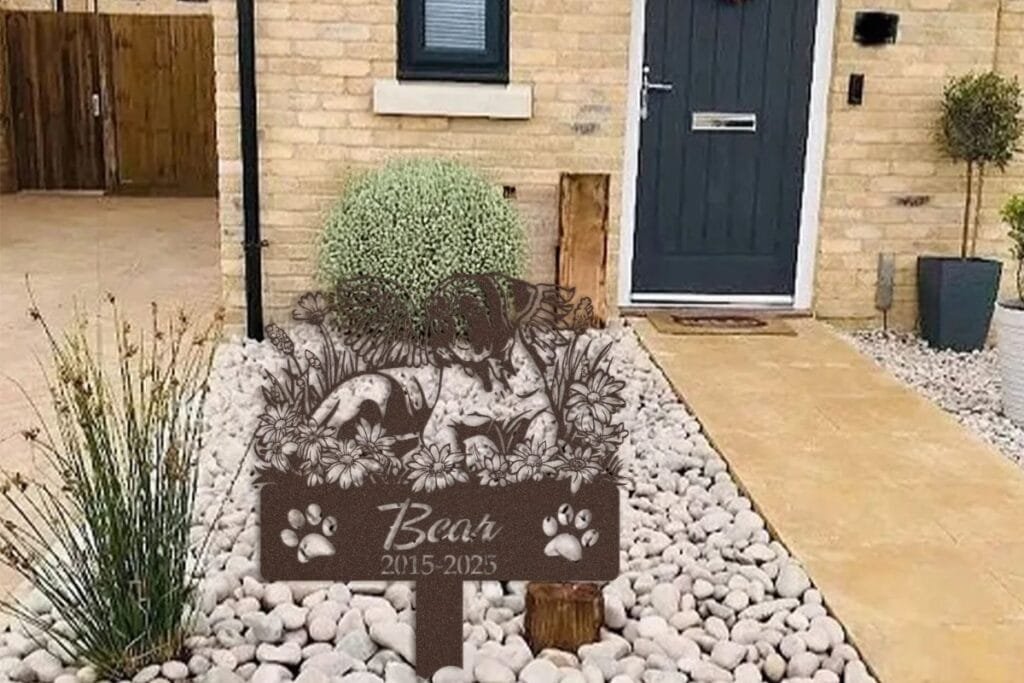
A garden bed benefits from having a clear focal point, and a personalized pet grave marker works well for that — something to plant around rather than a bed with no obvious center. Placing it first and building the planting around it tends to look more intentional than adding a marker in after the fact.
A Garden That Changes Instead of Fading
The goal isn’t a garden that peaks once and fades — it’s one that keeps changing throughout the year, the way any living thing does. Planting for every season means there’s almost always a reason to step outside and see what’s blooming near their memorial marker, which turns tending the garden into its own quiet way of staying close to the memory.