

How to Say Goodbye to a Pet: A Gentle Guide
Saying goodbye to a pet is one of the hardest things a person ever does, and nobody gives you instructions for it. Whether you have weeks, days, or only a few hours, there are small, gentle ways to make that time feel as peaceful as it can. This isn’t medical advice. Your vet is the best guide for what your pet needs. It’s simply a companion for the heart.
Making the Last Days Gentle
When you know the time is near, many people find comfort in letting the days be soft and unhurried. A few ideas:
- Do the small favorites. A slow walk, a car ride with the window down, a spot in the sun, or whatever they loved most, within what your vet says is safe.
- Take photos and videos. Not posed ones. The ordinary moments of them being themselves are the ones you’ll treasure.
- Keep the routine steady. Familiar rhythms are comforting for them, and for you.
- Say what you want to say. It doesn’t matter whether they understand the words. It matters that you say them.
Talking With Your Vet
It’s okay to ask questions and to ask for time. Many people find it helps to talk through how your pet is doing, what to expect, and what the options are, and to write your questions down beforehand, because emotions can make it hard to remember them in the room. You don’t have to decide alone, and you don’t have to rush into answers.

On the Day
If you’re able, being present is often a comfort to both of you. Bring a favorite blanket or toy, and take a moment to be with them in whatever way feels right: a gentle hand, a quiet voice, a last cuddle. Some people want family around, and others prefer privacy. There’s no right way to do it. Whatever you choose, what your pet most needs is to feel safe and loved, and you can give that.
Small Keepsakes to Ask About
Before the day, you might ask whether the clinic can make a paw print, or whether you can keep a small clipping of fur. Some people also like to take a few last photos of the places and objects that were theirs. These details can feel small in the moment and become precious later. And if you need to decide what to do with their remains, our guide to what to do with your pet’s ashes can help when you’re ready.
After: Be Kind to Yourself
The days afterward can feel unreal. You might forget and reach for the leash, or listen for a sound that isn’t there. These aren’t signs you’re doing grief wrong. They’re signs of how deeply your life was woven with theirs. Eat something, drink water, and let people help. If you’re wondering how long the heaviness will last, our gentle guide to pet loss grief may reassure you.
Honoring Them Afterward
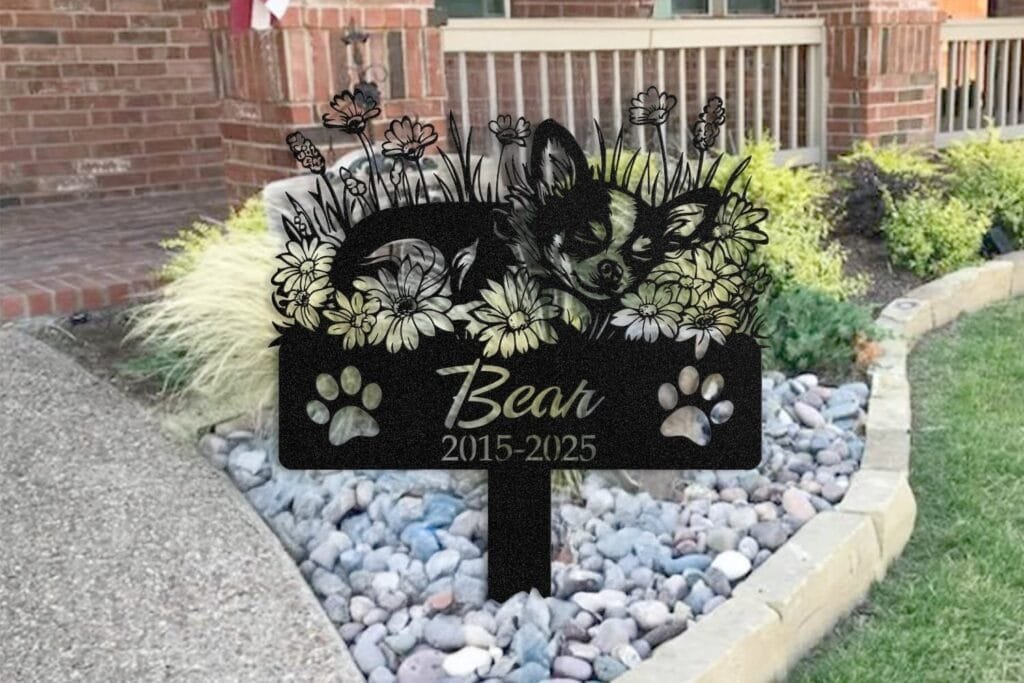
When you feel ready, a visible tribute can give your love somewhere to go. A sleeping pet memorial marker in the garden, a window suncatcher, or a small yearly ritual all help. If you want ideas, see creating a small remembrance ritual, and if there are children in the home, how to talk to your kids about losing a pet.
Common Questions
How will I know when it’s time?
This is a deeply personal question, and it’s the one to take to your vet. Many people find that talking honestly about quality of life, rather than waiting for a perfect sign, helps them decide with more peace.
Will I regret my decision?
Doubt is a normal part of grief, even after careful, loving choices. If you chose out of care for your pet, you gave them one last gift.
You loved them well. Whatever the last days look like, that love is the thing they carried with them, and it’s the thing that stays with you.


